In the competitive beverage industry, maintaining product quality and safety is a top priority. From bottled water to carbonated drinks and juices, every step of production requires careful attention to prevent contamination, preserve freshness, and extend shelf life. One technology that has become indispensable in modern beverage factories is the nitrogen generator. By providing a reliable source of high-purity nitrogen, these systems help ensure the consistency and safety of beverages while improving operational efficiency.
Understanding Nitrogen and Its Role in Beverage Production
Nitrogen is an inert gas that plays a critical role in the beverage industry. Unlike oxygen, nitrogen does not react with liquids or other substances, which makes it ideal for preventing oxidation and microbial growth. Oxidation can negatively impact the flavor, color, and aroma of beverages, while microbial contamination can pose serious health risks. By introducing nitrogen into packaging or production processes, beverage manufacturers can protect their products and maintain high standards of quality.
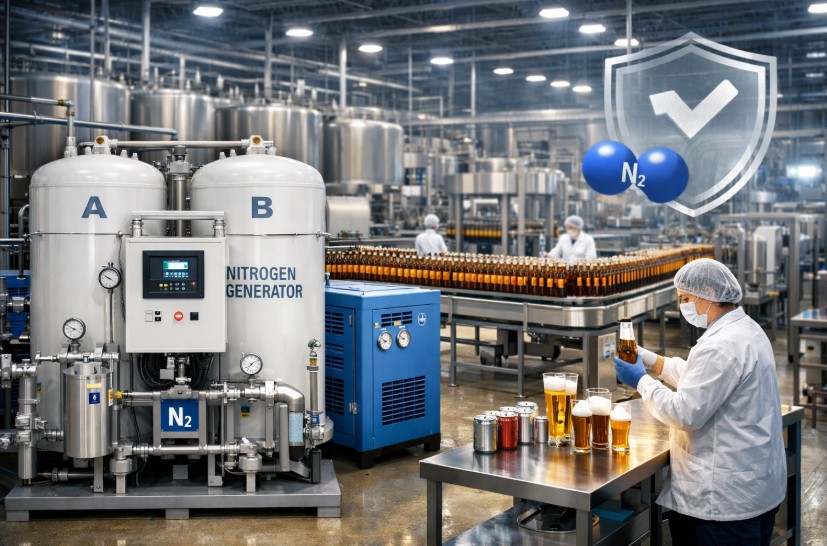
A nitrogen generator for beverage factory operations provides a continuous, on-demand supply of nitrogen gas. This eliminates the need for high-pressure cylinders or liquid nitrogen deliveries, reducing both costs and logistical challenges. The result is a safer, more efficient, and environmentally friendly solution for beverage production.
Types of Nitrogen Generators Commonly Used in Beverage Factories
There are several types of nitrogen generators, each with unique advantages depending on the scale and requirements of the beverage factory.
Pressure swing adsorption (PSA) nitrogen generators use a molecular sieve to separate nitrogen from atmospheric air. This method is highly efficient and can produce nitrogen with purities up to 99.999%, making it ideal for sensitive beverage applications.
Membrane nitrogen generators use specialized membranes to selectively filter nitrogen from compressed air. While slightly less pure than PSA systems, membrane generators are energy-efficient and easier to maintain, making them suitable for medium-scale operations.
Cryogenic nitrogen generators produce nitrogen by cooling and liquefying air, separating nitrogen from oxygen and other gases. These systems are more complex and are generally used for large-scale production where extremely high purity is required.
Choosing the right nitrogen generator for beverage factory use depends on factors such as production volume, required purity, and available space. Consulting with experienced suppliers can help manufacturers identify the most appropriate system for their needs.
Benefits of Using a Nitrogen Generator in Beverage Factories
Implementing a nitrogen generator in a beverage factory offers several advantages that go beyond simple gas supply. One of the primary benefits is product preservation. By flushing oxygen out of bottles, cans, and storage tanks, nitrogen helps maintain flavor, color, and aroma, ensuring that consumers receive beverages as intended.
Another significant advantage is cost efficiency. Traditional nitrogen supply methods involve purchasing cylinders or liquid nitrogen, which can be expensive and require careful handling. A nitrogen generator provides a continuous supply on-site, reducing recurring expenses and logistical burdens. Additionally, these systems are environmentally friendly, eliminating the need for transportation and minimizing gas waste.
Safety is also a major concern in beverage production. High-pressure cylinders and liquid nitrogen can pose risks if not handled correctly. A nitrogen generator reduces these risks by producing nitrogen safely on-demand and storing it at manageable pressures, creating a safer working environment for employees.
Applications of Nitrogen in Beverage Production
Nitrogen has multiple applications in the beverage industry, all aimed at enhancing quality and extending shelf life. One common use is blanketing. Nitrogen is introduced into storage tanks to create an inert atmosphere, preventing oxidation and contamination from air exposure. This is especially important for juices, craft beers, and other beverages sensitive to oxygen.
Nitrogen is also used in packaging. Carbonated drinks, wines, and juices benefit from nitrogen flushing during bottling, which removes oxygen and helps maintain carbonation and flavor. This process also reduces the risk of spoilage, making nitrogen an essential component in modern packaging lines.
Some beverage factories also use nitrogen for foaming and dispensing systems. In beer and other carbonated beverages, nitrogen can create a smoother, creamier texture, enhancing the drinking experience. By using a nitrogen generator for beverage factory operations, manufacturers can ensure a consistent and high-quality result every time.
Choosing the Right Nitrogen Generator for Your Beverage Factory
Selecting the right nitrogen generator involves evaluating several critical factors. Purity requirements are paramount, as different beverages may need varying levels of nitrogen concentration. For example, sensitive juices may require nitrogen purities above 99.9%, while carbonated soft drinks may function well with slightly lower purity levels.
Production capacity is another key consideration. Nitrogen generators come in a range of sizes, from small systems suitable for pilot-scale operations to large industrial units capable of supplying multiple production lines simultaneously. Understanding your factory’s daily nitrogen consumption helps in selecting the most efficient system.
Maintenance and operational simplicity should also be considered. PSA and membrane systems generally require minimal maintenance, while cryogenic systems may involve more complex procedures. Choosing a system that aligns with your factory’s technical capabilities ensures smooth, uninterrupted operation.
Enhancing Operational Efficiency with Nitrogen Generators
Installing a nitrogen generator for beverage factory use is not just about product quality—it also improves operational efficiency. On-site nitrogen production eliminates delays associated with cylinder deliveries or liquid nitrogen shipments, ensuring a constant supply for all production lines.
Modern nitrogen generators are equipped with advanced monitoring and control systems. These allow operators to track nitrogen purity, pressure, and flow in real time, enabling prompt adjustments to maintain optimal performance. Automated systems also reduce manual labor and minimize the risk of errors, contributing to overall productivity.
Energy efficiency is another consideration. Many nitrogen generators are designed to minimize power consumption while maintaining high output, resulting in lower utility bills and a smaller environmental footprint. By combining safety, efficiency, and quality, nitrogen generators offer a comprehensive solution for beverage manufacturers.
Real-World Examples of Nitrogen Use in Beverage Factories
Leading beverage brands around the world rely on nitrogen generators to maintain consistency and safety. In juice production, nitrogen flushing is standard practice to prevent oxidation and extend shelf life without adding preservatives. In craft breweries, nitrogen is used both in packaging and for dispensing, providing a smooth texture and enhanced foam quality. Even bottled water facilities benefit from nitrogen blanketing to reduce microbial growth and preserve freshness during storage.
These examples demonstrate the versatility of nitrogen generators and their critical role in modern beverage production. Factories that adopt this technology can reduce waste, enhance product quality, and ensure consumer satisfaction.
Future Trends in Nitrogen Generation for the Beverage Industry
The beverage industry is constantly evolving, and nitrogen technology is keeping pace with new demands. Smaller, energy-efficient generators are making it feasible for smaller factories and craft producers to benefit from on-site nitrogen production. Integration with digital monitoring and predictive maintenance systems is also becoming more common, allowing manufacturers to optimize performance and anticipate potential issues before they disrupt production.
Sustainability is another emerging trend. By generating nitrogen on-site, factories can reduce their carbon footprint by eliminating the need for transportation and reducing gas waste. This aligns with growing consumer demand for environmentally responsible practices and reinforces brand reputation.
See also: From Lab to Laptop: The Most Searched Tech Research Trends of the Year
Elevating Beverage Quality and Safety Through Nitrogen Technology
Investing in a nitrogen generator for beverage factory operations is more than a technological upgrade—it is a strategic decision that safeguards product quality, improves safety, and boosts operational efficiency. From preventing oxidation and contamination to enabling smoother production processes, nitrogen generators have become an essential tool for modern beverage manufacturers.
By understanding the types of nitrogen generators available, evaluating production needs, and implementing efficient systems, beverage factories can ensure their products consistently meet the highest standards. Whether for carbonated drinks, juices, or specialty beverages, on-site nitrogen production is a practical, cost-effective, and reliable solution that enhances both quality and safety.