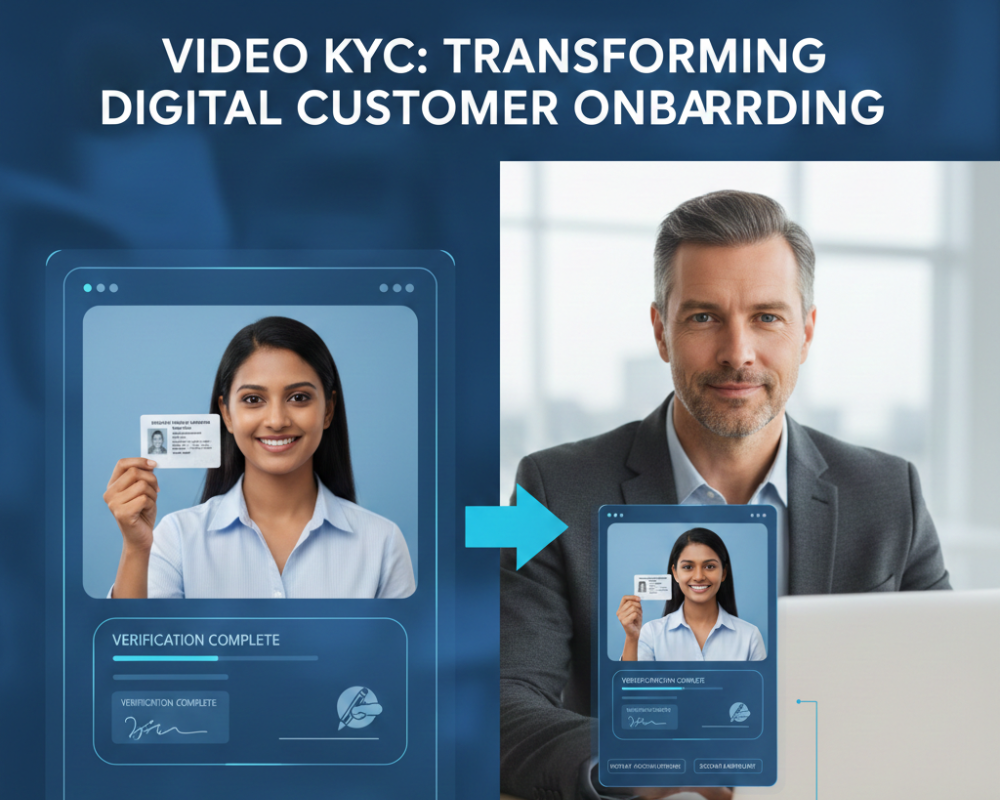
In the digital age, financial institutions and fintech companies face growing pressure to provide seamless, secure, and compliant onboarding experiences for their customers. Traditional Know Your Customer (KYC) processes, which often involve physical document verification and in-person visits, are time-consuming, costly, and inconvenient for both businesses and consumers. Enter Video KYC (Know Your Customer) – a revolutionary approach that is transforming digital customer onboarding by combining technology, compliance, and customer experience into one streamlined process.
The Rise of Digital Onboarding
The rise of online banking, digital wallets, and fintech platforms has accelerated the need for efficient onboarding solutions. Customers today expect instant account creation, minimal friction, and robust security. Traditional KYC processes, relying on physical documentation or manual verification, are ill-suited to meet these expectations. They are prone to errors, delays, and even fraud, making it crucial for financial institutions to adopt innovative solutions.
Video KYC addresses these challenges by allowing customers to verify their identity remotely via a live video call with a trained agent. This digital-first approach enables institutions to maintain compliance with regulatory standards while significantly improving the customer onboarding experience.
How Video KYC Works
The process of Video KYC is straightforward yet highly secure:
- Customer Initiation: The customer initiates the KYC process through the institution’s digital platform, usually a mobile app or website.
- Document Submission: Customers upload required documents such as a government-issued ID, passport, or utility bill for verification.
- Live Video Verification: A trained KYC agent connects with the customer via a secure video call. During the call, the agent verifies the authenticity of the submitted documents and confirms that the person on the video matches the identification provided.
- Biometric and AI Verification: Advanced platforms often use facial recognition, liveness detection, and AI-based document verification to enhance security and accuracy.
- Approval and Account Activation: Once verification is complete, the account is approved, and the customer can start using the services immediately.
This combination of human oversight and technology ensures that Video KYC is both efficient and compliant, reducing the risk of fraud while accelerating account onboarding.
Key Benefits of Video KYC
1. Enhanced Customer Experience
Video KYC eliminates the need for customers to visit a branch, submit physical documents, or wait for days for verification. The convenience of completing KYC from anywhere, anytime, improves customer satisfaction and encourages higher conversion rates for financial institutions.
2. Reduced Operational Costs
Traditional KYC processes require extensive manpower, paper handling, and physical infrastructure. Video KYC significantly lowers operational costs by digitizing verification processes and enabling remote onboarding. Financial institutions can allocate resources more efficiently, focusing on customer engagement rather than manual document verification.
3. Faster Onboarding
In a competitive digital landscape, speed is critical. Video KYC can reduce onboarding time from several days or weeks to just a few minutes. Instant verification allows customers to access services quickly, which is particularly important for online banking, trading platforms, and digital lending services.
4. Strengthened Compliance and Security
Regulatory authorities worldwide mandate stringent KYC and anti-money laundering (AML) procedures. Video KYC platforms are designed to comply with these standards by maintaining secure audit trails, recording verification sessions, and using AI-based fraud detection. This ensures that institutions remain compliant while protecting customers from identity theft and fraud.
5. Accessibility and Inclusion
Video KYC makes financial services more accessible to individuals in remote or underserved areas. By eliminating the need for physical presence, more people can participate in the financial system, promoting financial inclusion and broadening market reach for institutions.
The Role of Technology in Video KYC
Technology plays a central role in the effectiveness of Video KYC. Artificial intelligence, machine learning, and biometric verification enable accurate, real-time identity validation. Facial recognition software can match customer faces to submitted documents, while liveness detection ensures that verification is conducted with a live person rather than a photo or video replay. Additionally, secure encryption and cloud storage protect sensitive customer data, enhancing trust and regulatory compliance.
Challenges and Considerations
While Video KYC offers numerous benefits, there are challenges that institutions must address:
- Internet Connectivity: Reliable video calls require stable internet connections, which may be challenging in certain regions.
- User Education: Customers unfamiliar with digital verification may need guidance to complete the process smoothly.
- Data Privacy: Handling sensitive customer information digitally requires robust cybersecurity measures and adherence to data protection regulations.
Despite these challenges, the advantages of Video KYC far outweigh the limitations, making it a strategic investment for modern financial institutions.
The Future of Digital Onboarding
As fintech adoption grows and customer expectations evolve, Video KYC is poised to become the standard for digital onboarding. Innovations such as AI-driven risk assessment, blockchain-based identity verification, and cross-border KYC solutions are likely to enhance the efficiency, security, and scalability of the process.
In conclusion, Video KYC is transforming digital customer onboarding by offering a faster, safer, and more convenient alternative to traditional KYC methods. It empowers financial institutions to meet regulatory requirements while providing a seamless experience for customers. By embracing Video KYC, organizations not only streamline operations but also build trust, enhance security, and position themselves for success in an increasingly digital financial ecosystem.